
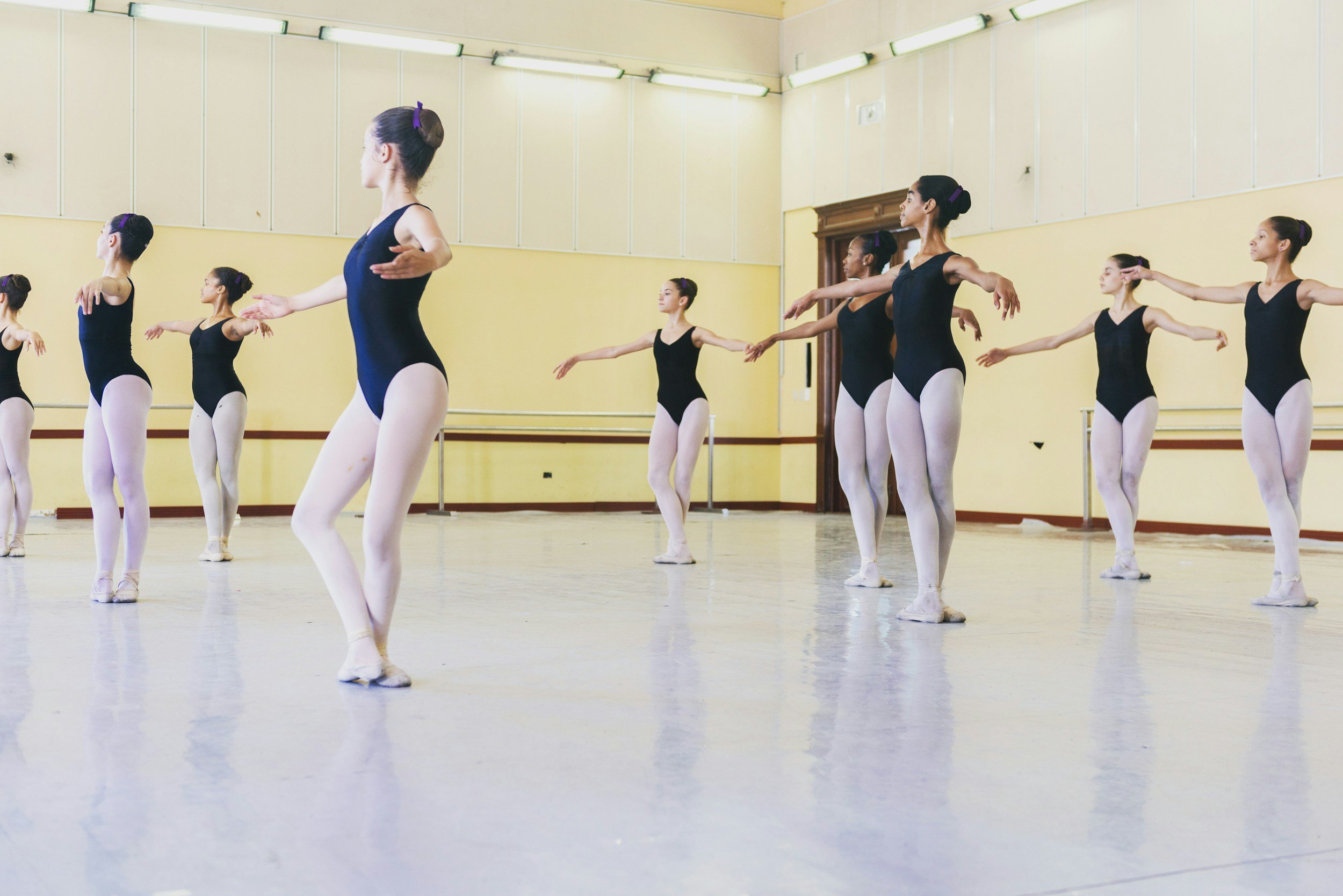
Progress in dance isn't always measured by the next level, a new trick or a more complicated routine. Sometimes, the most meaningful growth happens in ways you might not immediately notice.
When parents think about their child's progress in dance class, it's natural to look for the visible milestones. Are they learning new steps? Are they remembering their choreography? Are they becoming more confident? When will they move up to the next level?
These are all reasonable questions, but there's so much more to a dancer's development than what we see on the surface.
At McDonald-Wilson Dance Academy (MWDA), we believe dance education is about developing the whole dancer. From those first little steps in a preschool dance class to the dedication and artistry of an advanced dancer, every stage brings new challenges, discoveries and opportunities to grow.
So, what does progress in dance actually look like? And how can parents recognize it along the way?
Let's take a closer look.
1. Progress Isn't Always What You Think It Is
It's easy to associate progress with learning something new. A dancer masters a pirouette, remembers a longer combination, performs a new jump or moves into the next ballet level. These are exciting milestones, and they certainly deserve to be celebrated!
However, some of the most important developments happen gradually and may not be immediately obvious.
Progress might look like:
Standing a little taller and demonstrating improved posture.
Remembering a combination without needing as much guidance.
Listening carefully and applying a teacher's correction.
Developing better coordination, balance and body awareness.
Moving with greater musicality and confidence.
Becoming more comfortable participating in class.
Showing perseverance when something feels challenging.
Supporting classmates and contributing positively to the group.
A young dancer who once needed constant reminders to follow along may now confidently participate in an entire class. An intermediate dancer might be learning to refine a movement they have practised for years. An adult dancer may notice improved balance, strength or mobility.
All of these are meaningful signs of progress.
Growth isn't always about doing more. Sometimes, it's about doing what you already know with greater understanding, control and confidence.
2. Every Age and Stage Has Its Own Milestones
One of the wonderful things about dance is that learning continues throughout life. However, what progress looks like will naturally change as dancers grow, develop and gain experience.
At MWDA, we recognize that every dancer has an individual journey. Here are some of the things we look for at different stages.
Preschool Dancers: Building the Foundations
For our youngest dancers, ages three to five, progress often has very little to do with perfect technique.
At this stage, we're introducing children to the joy of movement while helping them develop important foundational skills.
Through age-appropriate dance activities, preschool dancers begin to develop:
Listening skills and the ability to follow directions.
Coordination, balance and spatial awareness.
Rhythm and an understanding of music.
Confidence participating in a group.
Independence and classroom readiness.
Creativity and an enjoyment of movement.
Sometimes progress is as simple as a child becoming comfortable enough to join the group, try something new or follow along with an activity they previously found challenging.
These early experiences create a wonderful foundation for future learning.
Primary and Junior Dancers: Developing Skills and Confidence
As dancers move into their primary and junior years, classes begin to build on those early foundations.
Dancers develop a stronger understanding of movement, musicality and technique. They begin to remember more complex combinations, coordinate different movements and develop greater control over their bodies.
This is also an important stage for building confidence and learning how to approach challenges.
Dancers begin to understand that improvement takes practice, patience and persistence. They learn to listen to feedback, try again and recognize the satisfaction that comes from mastering something that once felt difficult.
Intermediate and Senior Dancers: Refining Technique and Artistry
As dancers advance, the learning process becomes more detailed.
Rather than simply learning a step, dancers begin to understand how and why movements are performed. They work on alignment, strength, flexibility, coordination, control and precision.
Musicality and artistic expression also become increasingly important.
At this stage, progress may involve refining a familiar movement, improving the quality of a transition, developing greater strength or learning to interpret music in a more meaningful way.
These are the years when dancers begin to discover that technical ability and artistic expression work together to create a more complete dancer.
Pre-Professional Dancers: Commitment, Versatility and Growth
For dancers pursuing more advanced training, development involves an increased level of commitment and responsibility.
Dancers are challenged to refine their technique, develop versatility across dance styles, demonstrate consistency and become more independent in their learning.
They also gain valuable experience through additional training, performance opportunities and working toward more advanced artistic goals.
Progress at this level isn't simply about mastering difficult choreography. It's about developing the discipline, resilience, work ethic and artistry that support continued growth.
Adult Dancers: Progress at Every Age
And, of course, dance isn't just for children!
For adults, progress can mean improving strength, balance, flexibility, coordination and mobility. It might mean becoming more comfortable with choreography, remembering combinations more easily or simply feeling more confident moving to music.
Whether someone is returning to dance after many years or trying a class for the very first time, there is always something new to discover.
Progress doesn't have an age limit.
3. Different Dance Styles Develop Different Skills
Not all dance classes look the same, and neither does the progress that happens within them.
Each dance style brings its own unique challenges and learning opportunities. Exploring different styles can also help dancers develop a broader understanding of movement and become more versatile.
Here's a closer look at some of the skills developed through different dance disciplines.
Ballet
Ballet provides an important foundation for dance training. Dancers develop alignment, posture, strength, balance, coordination, control and musicality. Through structured training, they learn precision and an understanding of movement that can support their development across other dance styles.
Jazz
Jazz develops coordination, rhythm, dynamics, precision and performance quality. Dancers explore different movement styles while building strength, flexibility and confidence in their ability to perform.
Tap
Tap is an exciting way to develop rhythm, timing, musicality and listening skills. Dancers learn to create intricate sounds with their feet while developing coordination, clarity and an understanding of musical patterns.
Lyrical
Lyrical dance encourages dancers to explore musical interpretation, expression and movement quality. It provides opportunities to connect movement with music and develop a greater sense of artistry.
Hip-Hop
Hip-hop encourages individuality, rhythm, coordination, musical awareness and confidence. Dancers explore different movement styles, develop their own performance quality and learn to move with musicality and personality.
Every style offers something different, and each contributes to a dancer's overall development in its own way.
4. Why Repetition and Corrections Are Such an Important Part of Learning
Have you ever wondered why your dancer seems to be practicing the same exercise week after week? Or why their teacher continues to offer corrections on something they've been learning for several seasons?
There's a very good reason!
Dance is a cumulative learning process. Skills are developed through repetition, practice and refinement. A movement that initially requires a great deal of concentration may eventually become more natural, allowing a dancer to focus on additional details.
As dancers advance, the expectations change. A step that was once simply about understanding the movement may eventually involve refining alignment, improving control, developing greater musicality or adding more intricate detail.
Corrections are an essential part of this process.
In fact, receiving and applying corrections is one of the most valuable skills a dancer can develop. It teaches them to listen, think critically about their movement and take an active role in their own learning.
A correction isn't a sign that a dancer is falling behind. It's an opportunity to grow.
And sometimes, the most significant improvement happens when a dancer finally understands something they've been working toward for months.
5. Why Moving Up Isn't the Only Measure of Success
One question parents understandably have is when their dancer will move into the next class or level.
While progression through levels is an important part of dance education, moving up isn't the only indicator of development.
Dance placement considers a number of factors, including a dancer's technical readiness, understanding of foundational skills, strength, coordination, musicality and overall development.
In some cases, continuing to work within a familiar level provides the opportunity to strengthen technique and build confidence before taking on additional challenges.
This is particularly important in disciplines such as ballet, where foundational technique supports everything that follows.
At MWDA, we believe that thoughtful placement and appropriate challenges help dancers develop in a positive and sustainable way. Our goal isn't to rush dancers through levels, but to help them build the skills and confidence they need for the next stage of their journey.
Every dancer develops at their own pace, and that's something worth celebrating.
6. How Parents Can Support Their Dancer's Progress
Parents play an important role in creating a positive dance experience. While teachers guide the technical and artistic development that happens in class, encouragement at home can make a meaningful difference.
Here are a few simple ways to support your dancer:
Celebrate effort, not just achievement.
It's wonderful when a dancer masters a new skill, but don't overlook the effort that went into getting there. Celebrate their persistence, willingness to try and determination to keep learning.
Avoid comparisons.
Every dancer develops differently. Comparing your child's progress to that of a classmate, sibling or friend can take away from the enjoyment of their individual journey.
Encourage consistency.
Regular attendance gives dancers the opportunity to build on what they've learned, practise familiar skills and develop stronger connections with their classmates and teachers.
Show interest in what they're learning.
Instead of always asking, "Did you learn anything new today?" try asking, "What was your favourite part of class?" or "Was there something you found challenging today?"
These conversations encourage dancers to reflect on their experiences and recognize their own development.
Trust the teaching process.
Progress takes time. Your child's teachers are observing their development, identifying areas of strength and working toward the next appropriate challenges. If you have questions about your dancer's progress or placement, we always encourage you to connect with us.
The Most Meaningful Progress Happens Over Time
One of the most rewarding parts of dance education is watching a dancer grow.
It's seeing the preschooler who once needed a little encouragement become the confident young dancer who can't wait to get into the studio. It's watching an intermediate dancer discover a new level of strength and control. It's seeing a senior dancer develop their artistry and take ownership of their training.
And it's recognizing that the benefits of dance extend well beyond the studio.
The confidence to try something challenging. The discipline to keep practising. The ability to work with others. The resilience to make mistakes and try again. The joy of discovering what you're capable of achieving.
These are all part of the journey.
At McDonald-Wilson Dance Academy, we've been providing dance education in Calgary since 1971. We believe in developing dancers from the inside out, creating an environment where students of all ages and abilities can learn, grow and experience the many rewards of dance.
Whether your dancer is taking their very first steps or continuing their training at a more advanced level, remember that progress isn't always measured in leaps and turns.
Sometimes, it's measured in confidence, perseverance, friendships and the willingness to keep showing up.
And those are milestones worth celebrating.
Here's to every dancer, every stage and every little step forward.
Dancing from the inside out.
McDonald-Wilson Dance Academy (MWDA)
Brentwood, Northwest Calgary
