
What Is Your Child Really Learning in Dance Class? More Than Just Dance Steps
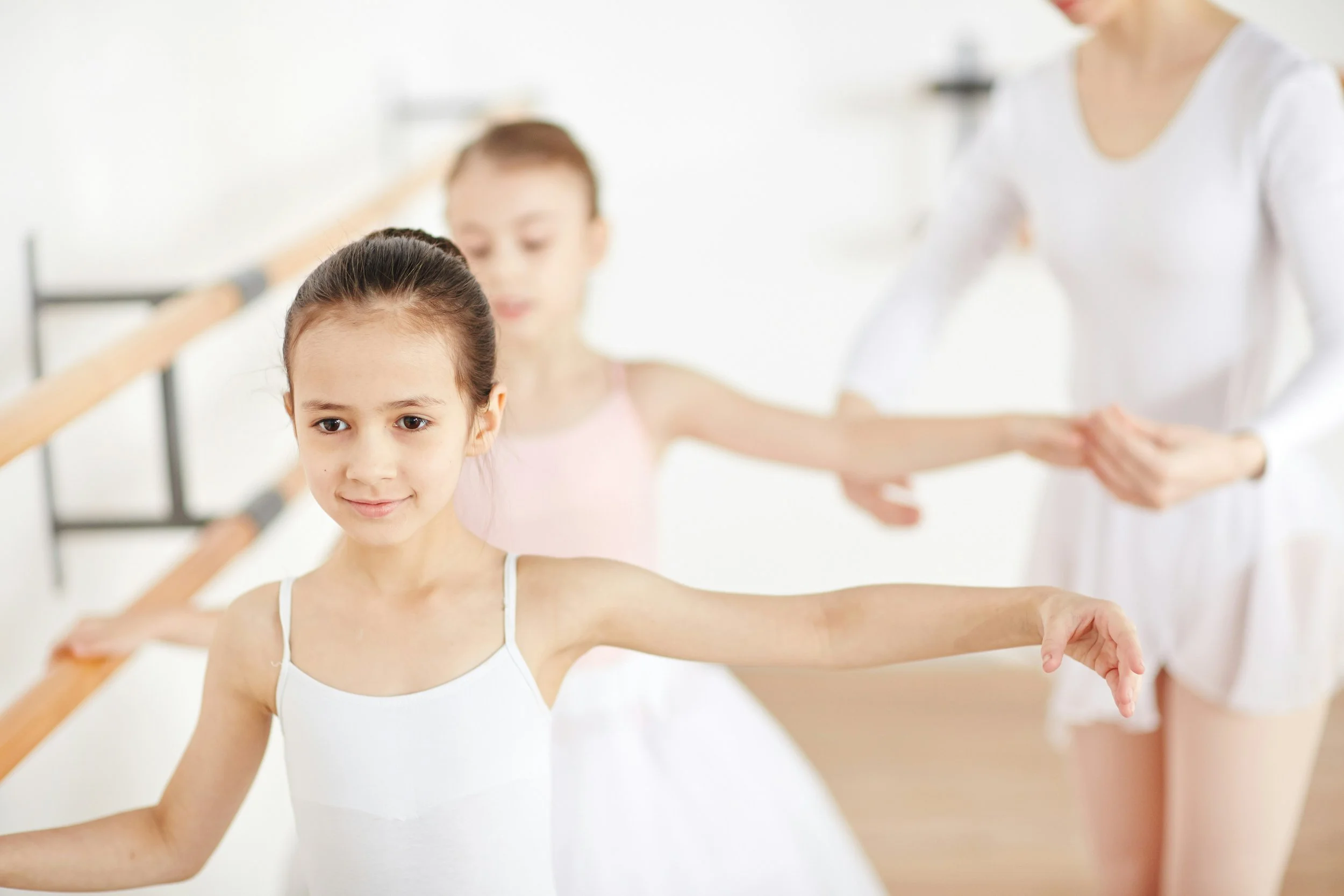
Discover how children's dance classes help develop confidence, focus, perseverance, coordination and a sense of belonging - and why choosing the right dance studio matters.
When you enrol your child in dance classes, you might picture ballet positions, jazz combinations, musicality and the excitement of learning new steps. And those things absolutely matter. Developing strong technique, musical understanding and physical coordination are important parts of a quality dance education.
But what if some of the most valuable things your child learns in dance class aren't steps at all?
Every week, children have opportunities to practise listening, problem-solving, perseverance, body awareness and confidence. They learn what it feels like to work toward something that doesn't come easily at first. They discover that progress takes time, that mistakes are part of learning and that they can accomplish things they once thought were difficult.
At McDonald-Wilson Dance Academy (MWDA), we've been providing dance education in Calgary since 1971. We believe that learning to dance is about more than developing a physical skill. It's also about giving children opportunities to grow, discover their abilities and develop a lasting appreciation for dance.
So, what is your child really learning in dance class? Let's take a closer look.
1. They're Learning How to Learn
A dance class involves much more than watching a teacher and copying movements.
Children must listen to instructions, observe demonstrations, remember sequences, recognize patterns, coordinate their bodies and apply corrections. Sometimes they need to process several instructions at once. Other times, they need to slow down and focus on one small detail.
For a young dancer, even a simple combination can involve a surprising amount of concentration.
As children progress through their dance education, they have opportunities to develop these skills through increasingly complex movements, musical patterns and combinations. They learn to pay attention to details, follow directions and put information into practice.
These are valuable experiences that extend beyond the dance studio. Children have opportunities to practise listening carefully, following a process and working through a task one step at a time.
Learning to dance is also learning how to approach something new.
2. They're Learning What to Do When Something Is Difficult
Not every new movement comes naturally. Sometimes a step feels awkward, a combination is difficult to remember or a skill takes weeks of practice before it begins to make sense.
And that is part of the learning process.
In a supportive dance environment, children have opportunities to experience the journey from “I can't do this yet” to “I'm starting to understand” and eventually to “I did it!”
That process teaches an important lesson: improvement doesn't always happen immediately, and difficulty doesn't mean failure.
With guidance from their teacher and consistent practice, dancers learn to revisit challenging movements, make adjustments and gradually build their abilities.
This doesn't mean every child will respond to frustration in the same way, or that every difficult moment will feel rewarding. Children still need encouragement, appropriate expectations and room to learn at their own pace.
However, dance provides a meaningful setting in which they can practise persistence and experience the satisfaction of working toward a goal.
At MWDA, we believe that progress deserves recognition — not just the finished result, but the effort, patience and determination that help a dancer get there.
3. They're Learning That Correction Is Part of Growth
For some children, being corrected can feel uncomfortable at first. They may worry about getting something wrong or feel disappointed when a movement doesn't look the way they expected.
Learning dance technique provides opportunities to develop a different perspective.
A teacher's correction isn't a personal criticism. It's information that helps a dancer understand what they're doing, what needs adjusting and how they can improve.
Perhaps a dancer needs to change their posture, refine the placement of their feet, listen more carefully to the music or adjust the timing of a movement. Each correction gives them something specific to work on.
Over time, children can begin to recognize that feedback is a normal and necessary part of learning a skill.
This is one reason the quality of dance instruction matters. Children need teachers who can offer clear guidance, set appropriate expectations and create an environment where dancers feel supported as they work toward improvement.
At McDonald-Wilson Dance Academy, developing sound technique and helping students understand how to improve are important parts of dance education. We want dancers to learn not only how to perform a movement, but also how to approach their learning with curiosity and determination.
4. They're Building Confidence Through Accomplishment
Confidence doesn't always arrive in one big moment. Sometimes it develops quietly, through small accomplishments that build on one another.
A child remembers a combination without help. A previously challenging movement begins to feel natural. They volunteer to demonstrate an exercise or feel comfortable participating in front of their classmates.
These moments may seem small to an adult, but they can be meaningful milestones for a young dancer.
Dance provides opportunities for children to become more familiar with their abilities, recognize their progress and discover that they can learn skills through practice.
Importantly, confidence doesn't have to come from being the most advanced dancer in the room or receiving the most attention.
It can come from recognizing personal growth.
“I couldn't do that before, but now I can.”
That is a valuable experience for a child to have.
At MWDA, we believe every dancer deserves the opportunity to experience progress and develop confidence in their own abilities. Children don't all learn at the same pace, and their journeys don't need to look identical for their accomplishments to matter.
5. They're Learning to Work Toward Personal Goals Without Having to Compete
Children are surrounded by opportunities to compare themselves with others. They may compare their reading level, athletic abilities, schoolwork or even how quickly they master something new.
Dance can offer another way to think about achievement.
In a non-competitive dance environment, the emphasis can remain on learning, individual development and the satisfaction of improving over time.
One dancer might be working on balance, another on musicality and another on refining a particular technical skill. Their goals may be different, but each has something meaningful to work toward.
This doesn't mean that progress happens without challenges or that dancers never notice differences in ability. Rather, it means that comparison doesn't have to define the experience.
At McDonald-Wilson Dance Academy, we value a non-competitive approach to dance education. We focus on building strong technique, encouraging personal growth and helping each student work toward their potential.
We also offer Royal Academy of Dance (RAD) ballet training and examinations for eligible students who wish to pursue that pathway. These provide structured opportunities to work toward established standards while continuing to develop individual skills.
A child can strive for excellence without needing to be better than someone else.
We believe that distinction is an important part of creating a positive and supportive dance experience.
6. They're Developing Body Awareness, Coordination and Musicality
Of course, the physical benefits of dance remain an important part of the experience.
Dance asks children to explore how their bodies move through space, coordinate different movements, respond to rhythm and develop control over their actions.
Depending on their age and level, dancers practise skills involving balance, flexibility, strength, coordination, posture and spatial awareness. They also learn to listen to music, recognize rhythmic patterns and connect movement with sound.
These abilities develop progressively through age-appropriate instruction and practice.
A good dance education also teaches children to understand that technique matters. Learning how to move with appropriate alignment, control and awareness helps provide a foundation for continued development.
At MWDA, our classes offer students opportunities to develop their physical skills while building a deeper understanding of movement and music.
The goal isn't simply to perform a step. It's to understand how the body works, how movement can be refined and how technique develops over time.
7. They're Learning How to Be Part of a Community
For many children, a dance class becomes a familiar part of their weekly routine.
They see their teacher, recognize their classmates, share experiences and gradually become more comfortable in the studio environment.
They learn to take turns, respect the learning space, pay attention when others are working and participate as part of a group. They also have opportunities to encourage classmates and celebrate one another's accomplishments.
These experiences can help children practise cooperation and consideration for others.
A sense of belonging develops differently for every child. Some settle in quickly, while others need more time to feel comfortable. A supportive environment gives children space to build relationships and participate at a pace that works for them.
For parents, this is another important part of choosing children's dance classes in Calgary. You're not simply choosing a convenient activity on the weekly schedule. You're choosing the learning environment, teaching approach and community your child will experience.
At MWDA, we value the relationships that develop between students, teachers and families. Our studio community is an important part of what makes dance meaningful beyond the classroom.
8. They're Discovering That Progress Takes Time
In a world where children often see instant results on screens, dance offers a different experience: learning a skill gradually, through repetition, guidance and practice.
A dancer may work on a movement for several weeks before it begins to feel comfortable. A combination that once seemed complicated may eventually become familiar. Skills learned earlier become the foundation for more advanced work later.
This progression is an important part of dance education.
Children begin to understand that learning isn't always a straight line. Sometimes they make rapid progress; sometimes they need more time. A skill may feel easy one day and challenging the next.
These experiences provide opportunities to practise patience and recognize the value of consistency.
This is also why attending class regularly matters. Each lesson builds on previous learning, helping students revisit skills, develop technique and prepare for what comes next.
At McDonald-Wilson Dance Academy, we believe that a strong dance education is built over time. We want students to have the opportunity to develop a solid foundation, recognize their growth and enjoy the process of becoming more capable dancers.
9. They're Building a Relationship With Dance That Can Last
Not every child who takes dance will pursue advanced training, perform on a stage or choose dance as a lifelong career. And they don't need to.
A meaningful dance education can take many forms.
For one child, dance may become a long-term passion. For another, it may be a way to stay active, enjoy music, express creativity or connect with friends. Some students may discover an interest in ballet examinations or performance opportunities, while others may simply enjoy the weekly experience of learning something new.
The value of dance doesn't depend on every child following the same path.
A positive early experience can help children develop an appreciation for movement, music, artistic expression and the satisfaction of learning a skill. It can also help them discover what they enjoy and what motivates them.
That's why finding the right dance studio matters.
Look for a studio that offers age-appropriate instruction, communicates clearly with families, values the learning process and provides a pathway that can grow with your child.
Whether your child is taking their first preschool dance class or progressing through more advanced ballet training, the experience should give them opportunities to learn, develop and find enjoyment in dance.
Choosing Dance Classes in NW Calgary: What Should Parents Look For?
If you're researching dance classes in NW Calgary, it can be tempting to compare studios based on schedules, locations, class offerings or performance opportunities alone.
Those practical details matter, but it's worth looking beyond them, too.
Consider asking the following questions when choosing a dance school for your child:
How is progress measured? Does the studio recognize individual development as well as technical achievement?
What is the teaching approach? Are lessons structured, age-appropriate and designed to help students build skills progressively?
How are corrections delivered? Do teachers provide constructive guidance that helps children understand how to improve?
What kind of environment will my child experience? Does the studio's approach align with your family's values and your child's needs?
Are there opportunities to grow? Can students continue developing their skills as their interests and abilities change?
Does the studio value the individual dancer? Is there room for children to progress at different rates without their experience being defined by comparison?
There isn't one dance environment that will suit every child and family. The right choice depends on your child's interests, your family's priorities and the kind of experience you're looking for.
Taking the time to understand a studio's philosophy can help you make a more informed decision.
Dance Education at McDonald-Wilson Dance Academy
At McDonald-Wilson Dance Academy, we've been part of the Calgary dance community since 1971. We believe that dance education should develop strong dancers while giving students opportunities to grow as individuals.
Our approach combines structured dance instruction with an emphasis on technique, personal progress and a supportive, non-competitive environment.
We offer dance classes for a range of ages and stages, from young beginners discovering movement for the first time to students pursuing more advanced training. Our programs provide opportunities to develop ballet technique, musicality, coordination and artistic expression while working toward individual goals.
For students following the Royal Academy of Dance pathway, examinations can provide a structured way to work toward recognized standards. Other students may enjoy developing their skills through their weekly classes and participating in performance opportunities when available.
Every dancer's journey is different, and we value the opportunity to support students as they discover what dance means to them.
We know that parents are investing more than tuition when they enrol their children in dance. They're investing time, trust and the hope that their child will have a positive and worthwhile experience.
We don't measure the value of dance education by steps alone. We also care about the effort a student puts in, the progress they make, the confidence they develop and the relationships they build along the way.
The Most Important Lessons May Be the Ones They Carry With Them
So, what is your child really learning in dance class?
They're learning steps, technique, musicality and movement. They're developing physical skills and discovering new ways to express themselves.
But they're also having opportunities to practise persistence, respond to feedback, work toward goals, recognize their progress and become part of a community.
These experiences don't guarantee that every child will develop the same skills or respond to every challenge in the same way. But they are meaningful opportunities that a thoughtful dance education can provide.
And sometimes, a parent sees the value most clearly in a moment that has nothing to do with a perfect performance.
It's the child who keeps trying after a difficult class. The one who walks in a little more confidently than they did last month. The dancer who finally masters a step they've been practising for weeks.
Those are moments worth celebrating.
At McDonald-Wilson Dance Academy, our goal isn't simply to help children learn to dance. It's to help them discover what they're capable of learning, one class at a time.
Because the steps they learn in the studio are only part of the story.
And the growth that happens along the way is worth just as much.
Is Your Child Ready to Discover the Value of Dance?
If you're looking for children's dance classes in NW Calgary, we'd love to introduce you to McDonald-Wilson Dance Academy.
Whether your child is a complete beginner or has previous dance experience, we invite you to explore our programs and find out more about our approach to dance education.
Visit mwda.ca to explore our classes and discover the MWDA difference.
McDonald-Wilson Dance Academy — building strong dancers and supporting personal growth through dance education in Calgary since 1971.
